Custom logo patches Canada matter most on uniforms. Depending on purpose, they can be made in many different types, which can change how your logo looks and how long it lasts.
Picking between the types available for your business that your staff can wear for years might sound easy until the choices stack up in front of you because that is where many people get confused.
This guide covers how to choose a patch type, prepare your logo, pick a backing and understand the price. It also walks through the ordering steps, from free design and mockup to a finished order.
What Custom Logo Patches Are?
A custom logo patch is a small piece of any material that we will further discuss in this guide, is designed to carry your logo and it attaches to clothing or gear.
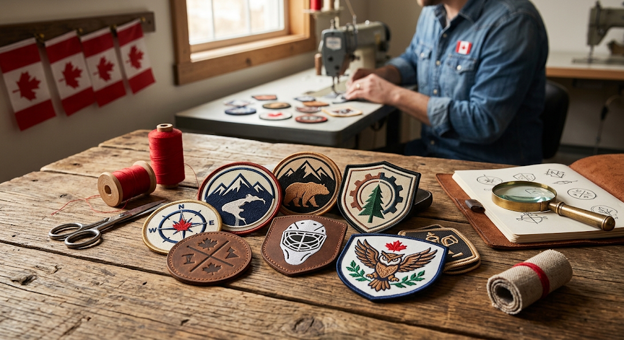
Company logo patches Canada teams order go on staff uniforms, club kit, school jackets and merchandise. Business logo patches Canada wide also turn up on bags, aprons and caps.
Patches or direct embroidery on the garment
Choose a patch when one logo has to go on many different items. It is made once, then sewn or pressed onto a polo, a cap or a bag.
Thick fabric, caps and bags are often easier to handle with a patch. You can have the flexibility to change an already used patch to a new jacket.
Direct embroidery can be a good option, though it can not do you any favours if you need to undo it, and it suits a single garment type where the logo can sit flat on thin fabric and might cost you more than a patch.
Which Type of Custom Logo Patch Fits Your Business?
Different types can suit different businesses and vary in looks and designs.
Embroidered Patches
Embroidered patches are made of a fabric base with your logo stitched with coloured threads onto it, which creates a raised, textured design.
Woven Patches
Weaved on a loom with fine threads together to create a flat design, that can carry small text and details. Their smooth surface gives the design a neat finish without raised stitching.
PVC Patches
PVC patches is a rubber from which patches are made by melting and moulding it. They are waterproof and provide greater durability than other types.
Chenille Patches
Soft yarn is looped into the fabric base, which makes them look fluffy. Chenille patches support big letters, numbers and sports patches that do not have tiny designs.
Leather Patches
Leather patches are made from either man made or real leather. The design can be engraved or printed on the surface, which makes them look so luxurious.
Sublimated Patches
Sublimated patches are made by printing designs on the fabric base using heat to produce colourful, detailed designs, it becomes part of the fabric and stay flat with not raised texture.
Sequin Patches
Sequins patches are small plastic discs that shine when the light hits them. Sequin patches are made by sewing those plastic pieces to a base, arranging them into a design, they add a fancy and party look.
Appliqué Patches
Applique patches Made by attaching pieces of fabric onto a base fabric to create layered shapes and designs. The different fabric layers add contrast, colour, and dimension to the finished patch.
| Patch type | How it is made | Suits | Trade-off |
| Embroidered | Thread stitched onto a fabric base | Bold logos, uniforms, workwear | Tiny text can fill in |
| Woven | Fine thread woven into a flat patch | Small text and detailed logos | Smoother, with less texture |
| PVC | Soft rubber-like plastic, moulded | Wet and outdoor wear, bags | Stiffer than fabric patches |
| Chenille | Soft, fuzzy yarn raised from a base | Varsity-style jackets, clubs, schools | Simple, bold shapes work best |
| Leather | Logo pressed or etched into leather | Caps, jackets, bags | Fewer colour choices |
| Sublimated | Design printed with dye | Gradients and full-colour artwork | Flat, with no raised texture |
| Sequin | Sequins stitched onto a base | Event and fashion wear | Less suited to workwear |
| Applique | Cut fabric pieces layered and stitched | Large letters, numbers, shapes | Not for fine detail |
Which Backing Should You Choose?
You will get different types of backings as well that you will have to decide from, each works differently. The following table has it all briefed out.
| Backing | How it attaches | Suits | Watch out for |
| Sew-on | Stitched to the garment | Workwear and items washed often | Needs sewing, and removal leaves small holes |
| Iron-on | Heat melts a glue layer | Cotton items with light use | Heat can damage nylon and some waterproof fabrics |
| Hook and loop (often called Velcro) | Matching strips, one on the patch and one sewn to the garment | Patches you swap, such as role or name patches | The garment needs its own strip, and the hooks can snag other clothes |
| Peel and stick | Adhesive layer pressed on | Events and short-term use | Not meant for washing |
Tips to Design Logos for Your Patches
1. Keep Your Logo Simple
Complicated shapes can get lost in the stitches if your patch is embroidered, or choose the woven patch if you do not simplify your design.
2. Choose Colours That Stand Out
Pick thread colours that stand out from each other, so your design can be spotted from afar.
3. Select the Right Font
Use bold fonts that stay readable at arm’s length, because curved and italic fonts can become hard to read.
4. Match the Logo to the Patch Type
Make sure your logo design is according to the patch type you want and it is better to avoid sequin and applique patches for logos.
- Embroidered for bold logos
- Woven for thin designs
- Pvc for water resistance
- Leather for premium look
- Chenille for bold letters or large patches
5. Design for the Patch Size
See where the patch will go and choose the right size because placement matters when it comes to deciding the size, and also check if your logo is readable at the size you have chosen.
6. Choose a Suitable Shape
Keep the shape of your patch neat rather than a custom shape because they make your logo look professional.
7. Use High-Quality Artwork
Create your logo in a vector format such as AI, EPS, SVG, or vector PDF when possible, since these formats allow the artwork to be resized without losing clarity.
8. Review a Digital Mockup
Review the digital mockup and check for
- Spelling
- Shape and size
- Readable at arm’s length
- Backing and border
How to Order Logo Patches
How to order custom patches Canada is easier than you imagine:
- Send your logo. Share the file you have. Our design team prepares the artwork for production, and design is free.
- Tell us where it goes. The garment and the placement decide the patch type, size and backing.
- Check the mockup. Mockups are free. Compare colours, spelling and size against the real item before you approve.
- Approve it. Production starts once you say yes.
- Receive your order. We ship on time, and there are no hidden charges added at the end.
Frequently Asked Questions
What file should I send for my logo patch?
Send the clearest version of your logo you have, such as a PNG, a PDF or a vector file.
How many patches should I order for a uniform?
Order a few more than your headcount. New starters, lost jackets and worn patches turn up sooner than expected.
How do I wash a garment with a logo patch?
Turn the garment inside out and choose a gentle cycle. Heat is the main risk for iron-on backing, so air drying is safer.
Can I remove a sew-on patch later?
Yes, cut the stitches with a seam ripper, a small tool for unpicking thread, and lift the patch off gently.
Which border colour works on dark fabric?
Pick a border that contrasts with the fabric. On a navy jacket, a light border outlines the shape, while a navy border makes the patch look smaller.
Design Your Own Custom Logo Patches
Custom logo patches Canada are in high demand, as many businesses prefer patches rather than direct embroidery, as they are light on their budget, can be reused on a new garment and provide durability and reliability. To design logos for your patches is quite simple, you just have to look out for the things that we have discussed above in this guide.
If you are ready to design your logos well and good, and if it’s still a hard job for you, our Eagle Patches CA team can help. Get a quote or ask for a design from scratch. We provide these services free of charge, so you don’t have to worry about it, we have got you.