
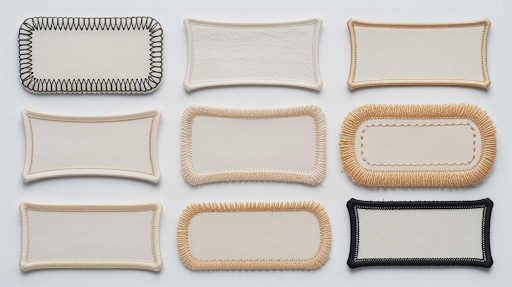
Edges matter. In hockey, in fashion, in branding and especially in custom patches. You can have the cleanest embroidery, the sharpest colours, the most Canadian-approved maple leaf design ever, but if the border is off? The whole patch feels unfinished. Borders aren’t just decoration; they’re the frame that decides whether your patch looks premium or… like it barely survived the wash.
So if you’re ordering custom patches in Canada and wondering which border style actually makes sense for your brand, uniform, club, or merch, good news. You’re about to get the full breakdown, minus the boring textbook tone. Let’s talk borders that hold, flex, fray (on purpose), and sometimes quietly steal the spotlight.
Why Patch Borders Deserve More Respect Than They Get
Most people obsess over patch size, colours, and backing. Fair. But the border type determines:
- How long your patch lasts
- Whether it keeps its shape after repeated wear
- How clean it looks on uniforms, hats, jackets, and bags
- How “finished” your brand feels at first glance
In Canada, where patches go through snow, rain, washers, dryers, backpacks, and beer spills, choosing the wrong border is a rookie mistake.
If you’re still brushing up on the basics of custom patches, this broader overview helps put borders into context: A Complete Canadian Guide to Custom Patches (2025 Update). Now let’s get into the borders themselves.
1. Merrowed Border (The Classic, Tried-and-True)
If custom patches had a national anthem, the Merrowed border would be humming in the background.
What it is
A thick, rounded stitched edge created using a special overlock machine. It wraps around the patch like a reinforced bumper.
Why Canadians love it
- Extremely durable (great for uniforms and workwear)
- Clean, professional look
- Holds shape through harsh use
Best for
- Police, fire, EMS, and security patches
- Sports team patches
- Scouts, cadets, and military-style patches
The catch
Merrowed borders only work well on simple shapes, circles, ovals, shields, rectangles. If your patch has sharp corners or intricate outlines, Merrow will fight you.
Pro tip: If your patch will live outdoors or on heavy jackets, this border is almost always a safe bet.
2. Heat-Cut Border (Sharp, Modern, No-Nonsense)
If Merrow is classic Canada, heat-cut borders are modern downtown Toronto.
What it is
The patch is laser or heat cut along the exact shape of the design, then sealed to prevent fraying.
Why it stands out
- Super clean, sharp edges
- Works perfectly for complex shapes and details
- Gives a sleek, contemporary look
Best for
- Name patches
- Fashion apparel
- Promotional and branding patches
- Detailed designs with curves or points
The catch
Heat-cut borders are slightly less rugged than Merrowed ones. Still durable—but better suited for controlled wear rather than hardcore environments.
Branding insight: If your patch screams “modern brand” or “streetwear drop,” heat-cut is usually the move.
3. Satin Stitch Border (Clean Look, More Control)
The satin stitch border sits between Merrowed and heat-cut—kind of like the sensible middle child.
What it is
A dense line of embroidery stitches sewn around the edge of the patch.
Why people choose it
- Cleaner than Merrowed
- More flexible shape options
- Great for medium-detail designs
Best for
- Corporate branding patches
- Event patches
- School and university patches
The catch
Not as thick or protective as a Merrowed border, but more polished than basic heat-cut edges.
Canadian use case: Perfect for conferences, corporate swag, or university clubs that want polished, not bulky.
4. Embroidered Border (Border That Blends In)
Sometimes you don’t want the border to shout. You want it to blend.
What it is
The border is embroidered as part of the design itself rather than added as a separate edge.
Why it works
- Seamless, integrated look
- More design freedom
- Can match or contrast colours creatively
Best for
- Artistic or custom-shaped embroidered patches
- Fashion patches
- Limited-edition merch
The catch
Requires experienced digitizing. A poorly done embroidered border can look messy fast.
Design note: This is where experienced Canadian patch makers really show their skill.
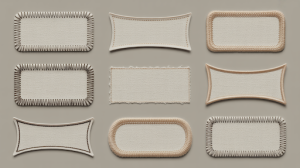
5. Raw Edge / No Border (Yes, It’s a Thing)
Breaking the rules? Bold choice. Sometimes it works.
What it is
No defined stitched border, just the edge of the fabric, sealed or left intentionally raw.
Why people choose it
- Vintage or distressed aesthetic
- Minimalist fashion look
- Feels handcrafted and unique
Best for
- Denim jackets
- Fashion brands
- Creative or artistic projects
The catch
Durability is lower unless sealed properly. This is a style-first choice, not a longevity-first one.
Canadian fashion insight: Raw-edge patches are showing up more in indie brands and streetwear lines across Vancouver and Montreal.
6. Laser-Cut Border (Ultra-Precision, Zero Guesswork)
Think of laser-cut borders as heat-cut borders that went to finishing school.
What it is
A laser precisely cuts the patch edge to match complex contours, then seals it cleanly.
Why it matters
- Razor-sharp edges
- Perfect for logos with fine detail
- Consistent shape across large orders
Best for
- Corporate branding
- High-volume promotional patches
- Fashion-forward Canadian brands
The trade-off
Slightly higher cost than basic heat-cut but the finish looks premium and intentional.
Reality check: If your logo has sharp angles or intricate curves, laser-cut borders save you from sloppy edges.
7. Frayed Edge Border (Controlled Chaos)
Yes, frayed edges are intentional and yes, they’re having a moment.
What it is
The custom patch edge is designed to fray slightly while still being reinforced underneath.
Why people love it
- Vintage, rugged aesthetic
- Handmade feel
- Stands out in fashion and denim
Best for
- Denim jackets
- Lifestyle brands
- Music merch and indie labels
The risk
This style demands expert manufacturing. Poor execution turns “rugged” into “ruined.”
Canadian style note: Frayed borders pair beautifully with denim, flannel, and outdoor-inspired apparel.
8. Die-Cut Border (Shape Over Everything)
If your patch isn’t a circle, rectangle, or shield, die-cut borders are your friend.
What it is
A custom cutting die trims the patch to exact shape specifications.
Why it’s useful
- Perfect shape accuracy
- Great for logos and mascots
- Keeps edges uniform
Best for
- Brand logos
- Promotional patches
- Unique design outlines
Heads-up
Die-cut borders are usually combined with heat sealing or stitching for durability
9. Overlocked Border (Heavy-Duty Alternative)
Less common, but incredibly tough.
What it is
A tightly stitched edge similar to Merrowed but flatter and denser.
Why choose it
- Strong reinforcement
- Cleaner than traditional Merrow
- Excellent durability
Best for
- Workwear
- Industrial uniforms
- Outdoor gear
Cold-weather approved: Overlocked borders handle heavy fabrics and rough use, very Canada-friendly.
Matching Borders with Patch Types (Don’t Skip This Part)
Borders don’t exist in isolation. They behave differently depending on patch type.
- Embroidered patches: Merrowed, satin stitch, or embroidered borders
- PVC patches: Molded edges (no stitching required)
- Woven patches: Heat-cut or laser-cut for detail
- Chenille patches: Typically felt-backed with stitched borders
If you’re choosing between patch types and border styles, this guide breaks it down cleanly: Canada’s Go-To-Guide to Every Custom Patch Type You Can Get.
Common Border Mistakes Canadians Should Avoid
Let’s save you time, money, and regret.
Picking Merrowed borders for intricate shapes
It’ll round off details you wanted sharp.
Choosing raw edges for heavy-use gear
Looks cool, until it falls apart.
Ignoring fabric thickness
Thick jackets + thin borders = curling edges.
Treating borders as an afterthought
Your border is part of your design, not an accessory.
FAQs
What’s the most durable border for custom patches?
Merrowed and overlocked borders offer the highest durability, especially for uniforms and outdoor use.
Can heat-cut borders fray over time?
Not if done correctly. High-quality heat sealing prevents fraying.
Are raw-edge borders a bad idea?
Not at all, if the style fits your brand and the patch isn’t for heavy wear.
Do borders affect patch cost?
Yes. Specialty borders like laser-cut or frayed edges can increase cost slightly, but often improve perceived value.
Which border looks best for branding patches?
Heat-cut and satin stitch borders offer the cleanest, most modern appearance for branding.
Borders That Mean Business!
Borders determine how long your custom patches last, how professional they look, and how your brand feels in someone’s hand. At Eagle Patches Canada, we help you choose borders that match your patch type, fabric, use case, and brand personality, without guesswork or upselling.
If you’re planning a patch order and want it done right the first time, start by choosing the border with Eagle Patches Canada that works as hard as your brand does. Because in Canada, details matter and the edge is where quality shows first.