
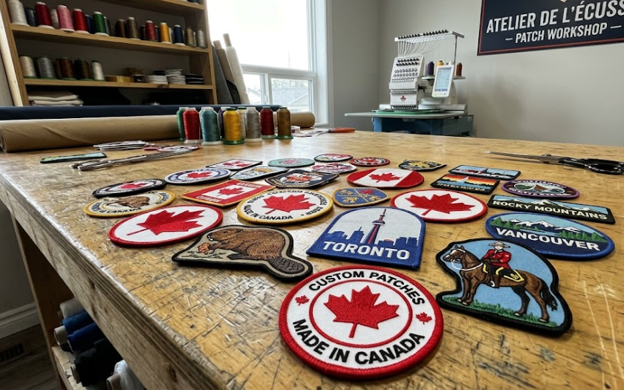
Finding the right custom patch maker in Canada is one of the most important decisions a business, sports team, motorcycle club, or organization will make when building custom patches Canada that represent their brand.
A custom patch is often the first physical object a customer, teammate, or member holds in their hands, and a poorly made one can undercut months of brand building in seconds.
With dozens of suppliers now claiming to be the top patch maker Canada has to offer, it has become harder than ever to separate genuine Canadian manufacturers from resellers who simply relabel imported goods.
This guide walks through every factor that matters when evaluating a custom patch maker in Canada, from material selection and production transparency to pricing structures and turnaround times, so that your next order arrives exactly as you imagined it.
Whether you are ordering ten patches for a small startup or five thousand for a national rollout, the process of choosing a supplier should never feel like a guessing game.
By the end of this guide, you will know precisely which questions to ask, which red flags to avoid, and which criteria separate a dependable patch manufacturer in Canada from one that will leave you disappointed.
Why Choosing the Right Custom Patch Maker in Canada Matters
Custom Patches Canada can be small, but the stakes attached to them are not. A uniform patch that peels after two washes, an embroidered logo that bleeds colour, or a shipment that arrives three weeks late can derail a product launch, a team season opener, or a client presentation.
Because patches are typically ordered well in advance of an event or product release, mistakes are expensive to fix on short notice. Beyond durability, there is also a question of brand consistency. Every patch that leaves a factory carries your logo, your colours, and, by extension, your reputation.
A supplier that cuts corners on thread quality or backing material puts that reputation at risk every time someone wears or displays the finished product. This is why the selection process deserves the same scrutiny that a business would apply to choosing a printing company or a promotional merchandise partner.
Canadian buyers also face a specific challenge that shoppers in other countries do not always consider: many companies marketing themselves as Canadian patch makers are in fact resellers who forward orders to overseas factories and add a markup.
This is not inherently dishonest, but it does mean longer lead times, less control over quality, and reduced accountability if something goes wrong. Understanding how to identify a genuine domestic manufacturer versus a middleman is one of the most valuable skills a buyer can develop when trying to understand how to order custom patches in Canada.
Key Factors to Consider When Choosing a Custom Patch Maker in Canada
Manufacturing Location and Production Transparency
The single most important question to ask any supplier is where the patches are actually produced. Some companies operate their own patch manufacturing facilities on Canadian soil, while others function purely as order-taking storefronts that route production overseas.
Neither approach is automatically wrong, but the difference matters enormously for turnaround time, quality control, and communication. A manufacturer that owns its own facility, digitizing team, and stitching floor can typically offer faster proofing, more accurate colour matching, and a single point of accountability if a design needs revision.
Ask directly whether the company operates its own production floor or works with a network of subcontractors. A transparent supplier will answer this question immediately and without hesitation.
Patch Types and Material Range Offered
Not every patch style suits every use case. A custom patch maker in Canada worth working with should offer the full range of materials, including embroidered, PVC, woven, chenille, leather, sublimated, applique, and sequin patches, so that the material can be matched to the application rather than the application being forced to fit whatever the supplier happens to stock.
Embroidered patches remain the most common choice for uniforms, team gear, and traditional branding because of their textured, classic appearance. PVC patches suit outdoor gear, tactical equipment, and anything that needs to resist moisture and abrasion.
Woven patches work well for designs with fine text or intricate detail that embroidery threads cannot capture cleanly. Chenille patches deliver a raised, varsity-style look popular with schools and athletic programs.
Leather patches suit premium apparel, caps, and craft goods. A supplier that genuinely manufactures across all of these categories, rather than outsourcing whichever one you happen to need, is a strong signal of manufacturing depth.
Minimum Order Quantities
Minimum order quantities, or MOQs, vary widely across the industry. Some suppliers require orders of one hundred pieces or more before they will even generate a quote, which shuts out small businesses, individual creators, and startups that want to test a design before committing to bulk production.
Look for a patch maker in Canada willing to start production with small quantities, ideally as low as ten pieces, while still offering meaningful discounts as order volume increases. This flexibility allows a business to validate a design in the real world before scaling up.
Turnaround Time and Shipping
Production speed is often the deciding factor for buyers working against an event date, a product launch, or a seasonal deadline. Ask for a specific production timeline in business days, not a vague estimate, and confirm whether that timeline begins after design approval or after payment.
A dependable custom patch manufacturer will also be upfront about shipping times across different Canadian provinces, since delivery to Nunavut or rural British Columbia will naturally take longer than delivery within Ontario or Quebec. Free shipping across the country is an added benefit worth prioritizing, since patch orders can otherwise carry unpredictable freight costs.
Pricing Structure and Bulk Discounts
Transparent, tiered pricing is one of the clearest signs of a trustworthy supplier. Pricing should scale down per unit as order quantity increases, and the supplier should be willing to share that pricing structure upfront rather than requiring a sales call to extract a number.
Watch for hidden costs such as digitizing fees, revision charges, or rush fees that only appear after a quote has already been agreed upon. A custom patch maker in Canada that publishes clear, competitive pricing and stands behind it demonstrates confidence in its own cost structure.
Design Support and Proofing Process
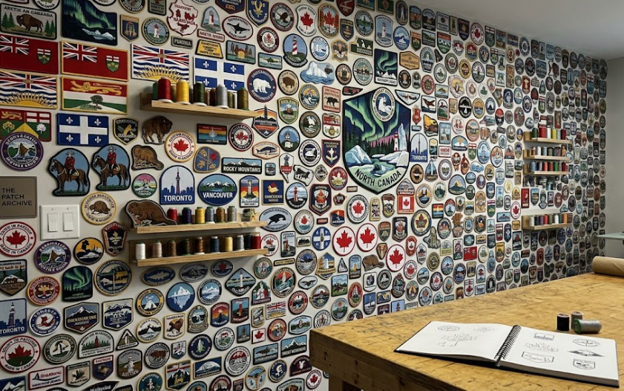
A strong Canadian patch manufacturer or supplier will offer a free digital mockup before any production begins, along with unlimited or generously allotted revisions at no extra charge. This step protects the buyer from receiving a finished product that does not match expectations.
Ask how many rounds of revisions are included and whether the design team works directly from a logo file, a rough sketch, or even a verbal description, since not every buyer arrives with print-ready artwork.
Customer Reviews and Reputation
Verified reviews, particularly those tied to a platform like Google, offer a level of accountability that testimonials on a company’s own website cannot match. A supplier with thousands of verified reviews across a long operating history has demonstrated consistency at scale, which is a far stronger signal than a handful of curated quotes.
Search for the company name alongside terms like “reviews” or “complaints” before placing a large order, and pay attention to how the company responds to any negative feedback that does appear. Collaborating with the Top 10 Custom Patches Companies in Canada will help avoid any troubles, as they have tons of verified positive reviews.
Types of Custom Patches Available in Canada
Understanding the material options available helps buyers ask more precise questions when requesting a quote.
- Custom embroidered patches use threaded stitching to build up texture and colour, making them ideal for uniforms, jackets, and traditional team gear.
- Custom PVC patches are moulded from durable, rubber-like material, offering a 3D effect and strong resistance to weather, making them popular for outdoor brands, tactical gear, and motorcycle clubs.
- Custom woven patches use a tighter weave than embroidery, allowing for finer detail and thinner lines, which suits logos with small text or intricate line work.
- Custom chenille patches create a soft, raised, fuzzy texture associated with varsity jackets and school letters.
- Custom leather patches bring a premium, rugged aesthetic often used on caps, bags, and craft apparel.
- Custom sublimated patches allow for photorealistic, full-colour designs with gradients that embroidery cannot reproduce.
Each material carries different price points, minimum order requirements, and production timelines, so it is worth discussing the intended use case directly with the supplier before finalizing a material choice.
Questions to Ask Before You Order
Before committing to any patch maker in Canada, request clear answers to a short list of direct questions. Ask where the patches are physically produced and whether the company operates its own facility. Ask for the exact production timeline in business days and whether that clock starts at design approval or at payment.
Ask whether a free digital mockup is included and how many revision rounds come with it. Ask for the full pricing breakdown at several different quantity tiers, including any setup or digitizing fees.
Ask about the backing options available, such as iron-on, sew-on, Velcro, or adhesive, since backing choice affects both cost and application. A supplier that answers all of these questions clearly and without pressure to commit immediately is generally one worth trusting with a larger bulk wholesale order.
Red Flags to Watch For When Choosing a Patch Supplier
Certain warning signs should give any buyer pause. Vague or evasive answers about where production actually happens are one of the clearest indicators of a reseller rather than a manufacturer.
Pricing that requires a phone call before any number is shared often signals inconsistent or inflated pricing designed to be negotiated case by case. A complete absence of verified third-party reviews, or reviews that appear only on the company’s own site, should also raise questions.
Finally, be cautious of suppliers unwilling to offer a free proof or mockup before production, since this removes the buyer’s ability to catch errors before they become expensive.
Why Canadian-Made Patches Are Worth the Investment
Ordering from a manufacturer that produces patches domestically offers advantages that go beyond simple national pride. Domestic production generally means shorter shipping distances within the country, fewer customs delays, easier communication in the same time zone, and a single accountable team overseeing the entire process from digitizing to final quality check.
For organizations that value supporting Canadian manufacturing, working with a company that operates its own facility on Canadian soil, rather than one that simply markets itself as Canadian while outsourcing production abroad, ensures that investment actually stays within the country’s manufacturing economy.
Frequently Asked Questions
How much do custom patches cost in Canada?
Custom patch pricing Canada varies by size, material, order quantity, and design colours. Small orders are costlier per unit, while bulk orders lower prices. PVC and chenille patches are usually more expensive. Request quotes for best value.
How long does it take to make custom patches in Canada?
Custom patch turnaround time in Canada takes 7-14 business days post-approval, varying by order size and complexity. Rush options exist for a fee. Shipping times depend on the destination. Confirm timelines accordingly.
What is the minimum order quantity for custom patches?
Minimum order quantities differ by supplier, ranging from ten to one hundred pieces. Low minimums benefit small businesses, while volume discounts apply at higher quantities.
What backing options are available for custom patches?
Common backing options for patches include iron-on, sew-on, Velcro, and self-adhesive, each suitable for specific applications. A supplier can recommend the best type based on intended use.
Choose Your Next Custom Patch Maker With Confidence
The best custom patch maker in Canada is one that combines domestic production, a full range of material options, low minimum order quantities, transparent tiered pricing, fast and clearly communicated turnaround times, and a verifiable track record of satisfied customers.
Suppliers that operate their own facilities, such as those based in Ontario with province-wide shipping, tend to offer the strongest combination of accountability and speed, since there is no third party between the buyer and the factory floor.
Before placing an order of any size, take the time to ask the direct questions outlined in this guide, request a free mockup, and confirm pricing at the quantity you actually need. A few extra minutes of research at the start of the process can save weeks of frustration and a wasted budget later on.
Have a design ready or just an idea? Send it over and Eagle Patches Canada will turn it into a free digital proof within one business day. That is how reliable custom patch makers operate. With years of excellence and thousands of satisfied customers, we are Canada’s trusted custom patch makers. Contact us for a free quote.