
One thing about the canadian brands that we all admire is that they don’t do boring. Whether it’s a hockey jersey in Red Deer or a tech firm in Ottawa, custom patches define the kit. The versatility score of custom patches sits higher than any other branding method. One product type works across sports, workwear, nonprofits, military, fashion, and corporate uniforms without changing the production process.
Custom patches Canada projects range from 10-unit club badge orders to 10,000-unit national workwear rollouts. The material changes. The backing changes. The size changes. The core function stays identical: put a sharp, durable identity marker on a garment and make it last.
This guide covers every major use case across Canada, the material decisions behind each one, and why sourcing from a local patch maker matters more than most buyers realise until a deadline hits.
Sports Teams: Building Identity on the Ice and Field
Stop using cheap screen prints. Embroidered patches give minor league teams a professional edge that survives the wash cycle.
Screen prints crack at the fold lines of a hockey jersey by season two. They peel off lacrosse pinnies in the equipment bag. They fade on curling club sweaters after fifteen trips through a commercial laundry.
A minor league crest patch on a well-cut jersey signals to every opposing team and every parent in the stands that this organisation takes its identity seriously. The same logic applies across the full range of Canadian team sports.
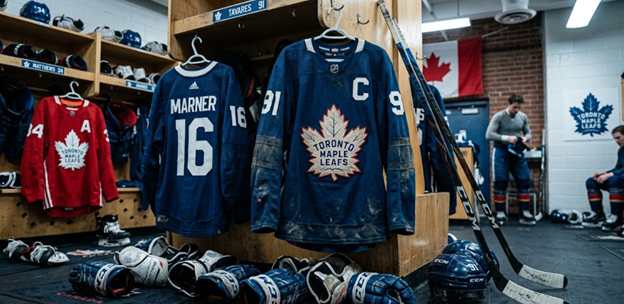
- Hockey: Jersey crest patches on the chest, number patches on the back and sleeves, and captain or alternate captain letter patches. Embroidered patches on hockey jerseys handle the sweat, ice spray, and equipment friction that destroy printed alternatives within months.
- Lacrosse: Canada’s national summer sport runs club colours and provincial crests on jerseys, bags, and warm-up gear. A patch maker Canada teams trust delivers consistent colour matching across full squad orders so every jersey in the dressing room reads as a cohesive set.
- Curling: Club crests on sweaters and jackets represent decades of tradition. Embroidered curling club patches carry heraldic detail, shields, rocks, brooms, provincial emblems, that requires thread density and colour precision that screen printing physically cannot replicate.
- Rugby, Soccer, and Basketball: Growing fast across Canadian cities and increasingly demanding the same professional patch standards that hockey programs have used for decades.
Clubs and Non-Profits: Symbols of Solidarity
A patch carries meaning that a lanyard or a branded pen never reaches. It sits on a jacket or a vest and tells the world without a single word that the wearer belongs to something.
Patches in Canada orders for clubs and non-profits span an enormous range of organisations, but the function is consistent across all of them. The patch marks membership. It signals shared purpose. It creates visual cohesion in a group of people who choose to be identified together.
- Motorcycle Clubs represent the most established patch culture in Canada. A full MC cut carries chapter patches, rank patches, territory rockers, and memorial patches, each with specific placement rules that the club defines and enforces.
- Scout Groups and Youth Adventure Clubs use merit patches as the oldest structured patch tradition in Canada. Scouts Canada has awarded merit badges since the organisation’s founding.
- Charity and Fundraising Organisations use custom patches as both member identification and fundraising merchandise. A well-designed charity patch at a walkathon or a gala event sells itself.
- Community and Cultural Groups indigenous community organisations, multicultural associations, heritage clubs, and regional cultural groups across Canada use patches to display identity on regalia, jackets, and ceremonial garments.
Why a Local “Patch Maker Canada” Matters for Your Timeline
Order from overseas and the timeline becomes someone else’s problem. Order from a patch maker Canada operation and the timeline stays in your hands.
The difference shows up the moment something goes wrong. A production error on an offshore order means a conversation across a time zone gap, a revised proof cycle that takes days, and a replacement shipment that adds weeks. A production error with a local Canadian supplier means a phone call, a same-day resolution, and a corrected order that ships domestically.
- No Currency Surprises: Pricing in Canadian dollars means the quote you receive is the invoice you pay. USD-denominated offshore orders fluctuate with the exchange rate between quote approval and delivery.
- No Customs Delays: International shipments to Canada clear customs at the discretion of CBSA. A shipment flagged for inspection adds days or weeks to a deadline-sensitive order. Domestic shipments move through Canada Post or courier networks on predictable schedules.
- No Hidden Import Duties: Custom patches imported commercially attract duties that offshore suppliers rarely factor into their quoted prices. The landed cost of an offshore order regularly exceeds the quoted price by 10% to 20% once duties, brokerage fees, and HST on import value get added.
- Faster Logistics to All Provinces: A Canadian production and shipping base reaches Toronto in two days, Calgary in three, Halifax in three, and Whitehorse in five. Comparable offshore orders take three to six weeks in standard production plus shipping windows.
- Direct Communication in Business Hours: A supplier operating in Canadian time zones picks up the phone when Canadian clients need answers. Offshore suppliers answer emails when Canada sleeps.
Choose Your Material: Embroidery vs. PVC for the Canadian Climate
Canada runs from minus 40°C winters in Nunavut to plus 40°C summers in Southern Ontario. A patch material that performs in one climate zone fails in another. The right material choice depends on where the patch lives, what garment it sits on, and what conditions it faces.
| Feature | Embroidered Patches | PVC Patches |
| Cold Resistance (-30°C to -40°C) | Threads can stiffen and become brittle in extreme cold | Remains flexible and durable even in deep freeze |
| Heat Resistance (+30°C to +40°C) | Can fade or weaken over time with prolonged heat exposure | Handles heat well without warping or fading easily |
| Water & Snow Exposure | Absorbs moisture; can stay damp and freeze | Fully waterproof; repels snow, rain, and slush |
| Durability in Harsh Weather | Moderate—wears down faster with repeated exposure | High—built for rugged outdoor conditions |
| Flexibility | Soft and fabric-like; comfortable on clothing | Slightly rubbery but still flexible |
| Detail & Texture | Classic stitched look; limited fine detail | Sharp, raised 3D detail with clean edges |
| Best Garment Use | Hoodies, uniforms, casual wear | Jackets, outdoor gear, tactical wear |
| Maintenance | May require careful washing and drying | Easy to clean; wipe or rinse off |
| Longevity (Outdoor Use) | Medium lifespan in harsh climates | Long-lasting even with heavy exposure |
| Overall Climate Fit | Better for mild to moderate conditions | Ideal for extreme Canadian climates |
FAQ
What is the best patch maker in Canada?
Eagle Patches Canada produces custom patches across all major types, embroidered, PVC, woven, leather, and rubber, with domestic production, Canadian dollar pricing, and shipping to all provinces and territories.
How much do custom patches cost in Canada?
Pricing depends on patch type, size, complexity, and quantity. Embroidered patches for standard sizes start at competitive per-unit rates that decrease significantly with volume. PVC and leather patches carry higher per-unit costs due to mould production requirements. Request a direct quote for accurate pricing on your specific order.
How long does production take?
Standard production runs 10 to 14 business days from approved artwork sign-off. Rush production is available for deadline-critical orders. Domestic shipping adds 2 to 5 business days depending on destination province or territory.
Can patches be sewn onto existing garments?
Yes. Patches with sew-on backing or channel stitch grooves attach to any fabric garment. The Eagle Patches Canada team advises on backing type based on garment construction and intended wear conditions.
Ready to Launch Your Project with Eagle Patches Canada?
The hockey season does not wait. The trade show does not move. The club anniversary happens once. Custom patches Canada projects need a supplier who hits the deadline, matches the colours, and delivers every unit to the same standard as the approved sample.
Eagle Patches Canada handles the full process, artwork review, material selection, production, quality check, and domestic shipping to every corner of the country. One supplier. One point of contact. No currency surprises and no customs queues.